A forward-deployed agent that does the groundwork before your engineers arrive.
It talks to everyone your product will touch, from the executives sponsoring it to the people doing the work, so your forward-deployed engineers start with the workflows mapped, leadership aligned and the value clear before the first demo.
Implementations are getting more consultative. Discovery hasn't kept up.
Every customer is a little different, and with AI your engineers can now build almost anything around them. What they are missing is the context: how each customer really works, what every leader wants and where the value is. Getting it still takes weeks of calls, or more people on the ground.
Kickoff workshops
You hear the process as senior people describe it, not from the people who will use the product.
One-to-one calls
The best detail, for a handful of people, over weeks of calendars.
Questionnaires
Skimmed by users, and filled in with the process as it should be.
A forward-deployed agent
It does the groundwork: one-to-one detail from the leaders and from the people who will use it every day, in parallel, all adding to the same picture.
Capture 12× more customer insight before your engineers start. Discovery usually reaches the sponsor and three or four team leads. FDE Force talks to everyone whose work your product will touch, often fifty or more.
"The CPO wants savings, the CFO wants control and the users want fewer clicks. We find out in month two."
"No two customers run the same way. We can build what each of them needs. What we never have is enough context to know what that is."
"We can't hire forward-deployed engineers as fast as we close deals, and each new one takes months to ramp."
Land the deal, then expand it.
On large deals, the slow part is getting every stakeholder aligned and a sandbox that fits how the customer works. Send the link during the evaluation and your team has both before the second meeting. Send it again after go-live and you can show what changed.
Close large deals faster
- The buying committee aligned. Every executive is asked what they need the product to achieve, so you see where the CFO and the head of operations pull apart before procurement does.
- A sandbox built around their work. Your engineers set up the proof of concept on the customer's real workflows and data, not a generic demo.
- The numbers they will judge it on. Each leader's measure of success, in their own words, ready for the business case.
Get the deployment right
- Every user heard. The people who will use it every day walk through how the work is really done, and see a partner who understands them, not another consultancy.
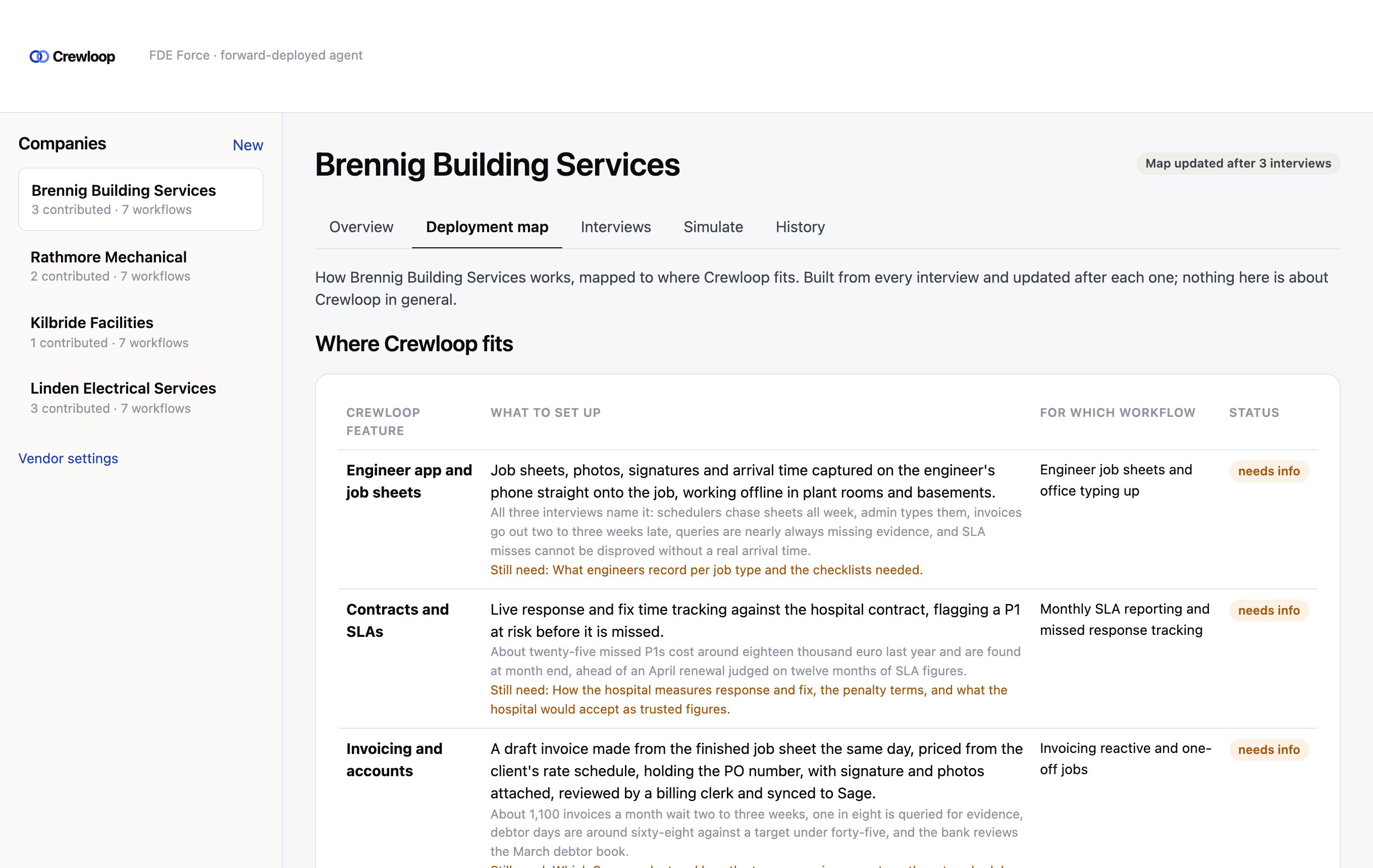
- Configured around how they work. Workflows, what to set up and the open questions, mapped to your product.
- Value early. Your engineers start on the use cases that matter most to the people who signed.
Prove the long-term value
- Build what they need, first time. No more weeks of engineering time and tokens spent vibe coding for a customer to keep them happy. What each team needs is known before anyone builds.
- The impact, measured. After go-live the same people are asked what has changed, against the measures their leaders set at the start.
- A case the CFO and CTO will back. The spend went on what the business asked for, and the evidence is there for the renewal and the next deployment.
Send one link. It talks to everyone your product will touch, in parallel.
One link per customer
It goes in your kickoff email to everyone your product will touch. No accounts.
Fifteen minutes each, by voice
Leaders are asked what they need the rollout to achieve. The people who will use it every day walk through real examples: steps, systems, handoffs, exceptions.
Your engineers hit the ground running
Armed with what each leader wants, the workflows, where the value is and the open questions, they spend the first meeting designing the solution.
Your engineers walk into the first meeting ready to talk solutions.
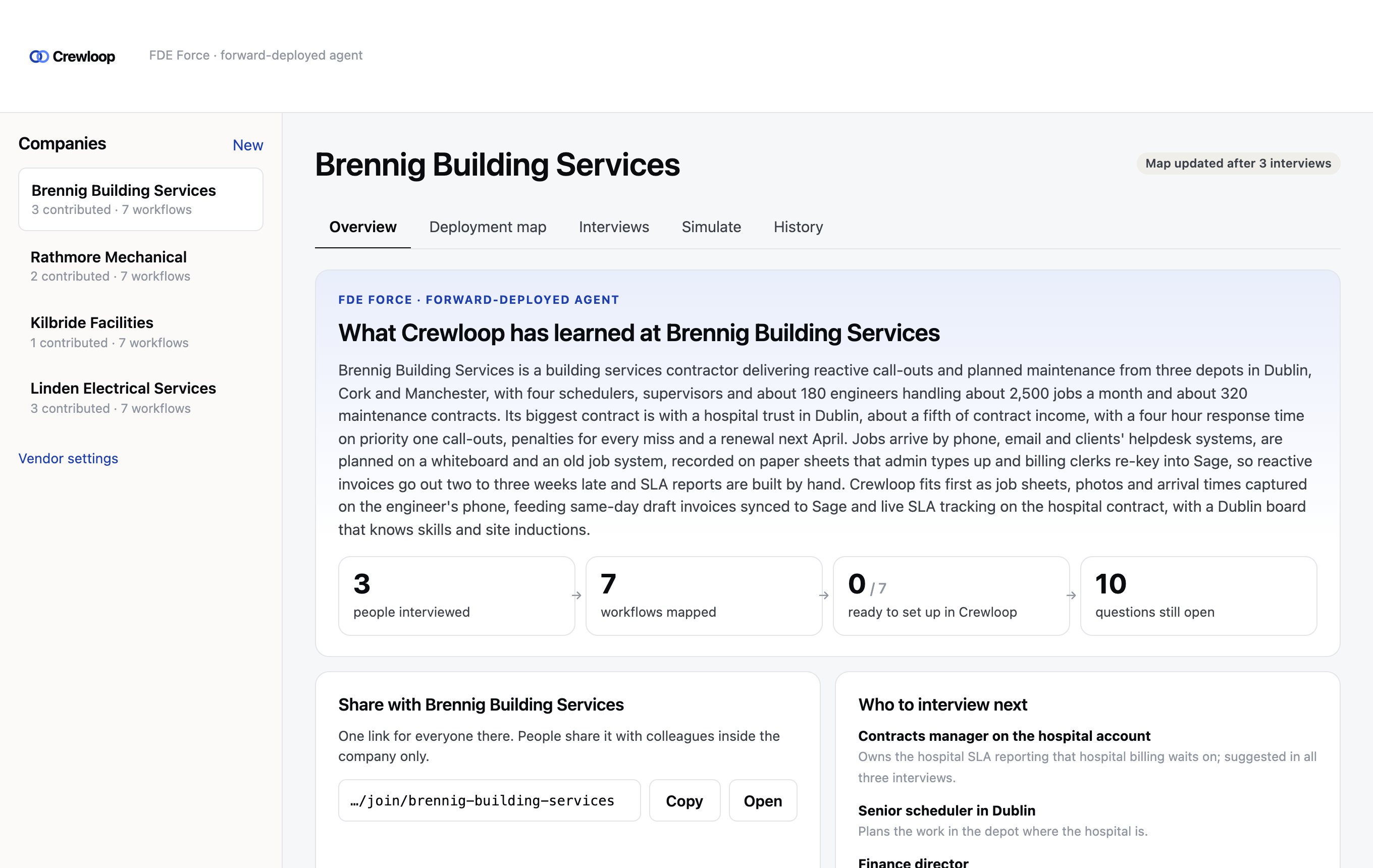
How the people who will use your product really work, from every team it touches. What each leader wants from the rollout and where they disagree. The use cases where your product creates value, and what to configure. So their first conversations with the customer are about the solution, not fact-finding, with every conversation there in full to prepare from.
Built for the first weeks of an implementation.
Your brand
Your name, logo and colours. FDE Force stays in the background.
Every side heard
Executives are asked what they need from the rollout, and the people doing the work how it really gets done.
A conversation they come back to
People reopen their link whenever they have more to add, and it picks up from what they said last time.
Full transcripts
Every conversation in full, with what your team learned from it.
Simulate first
Hear how it runs for your product before a customer gets the link.
Kept separate
No vendor ever sees another's customers or data.
Talk to a forward-deployed agent yourself.
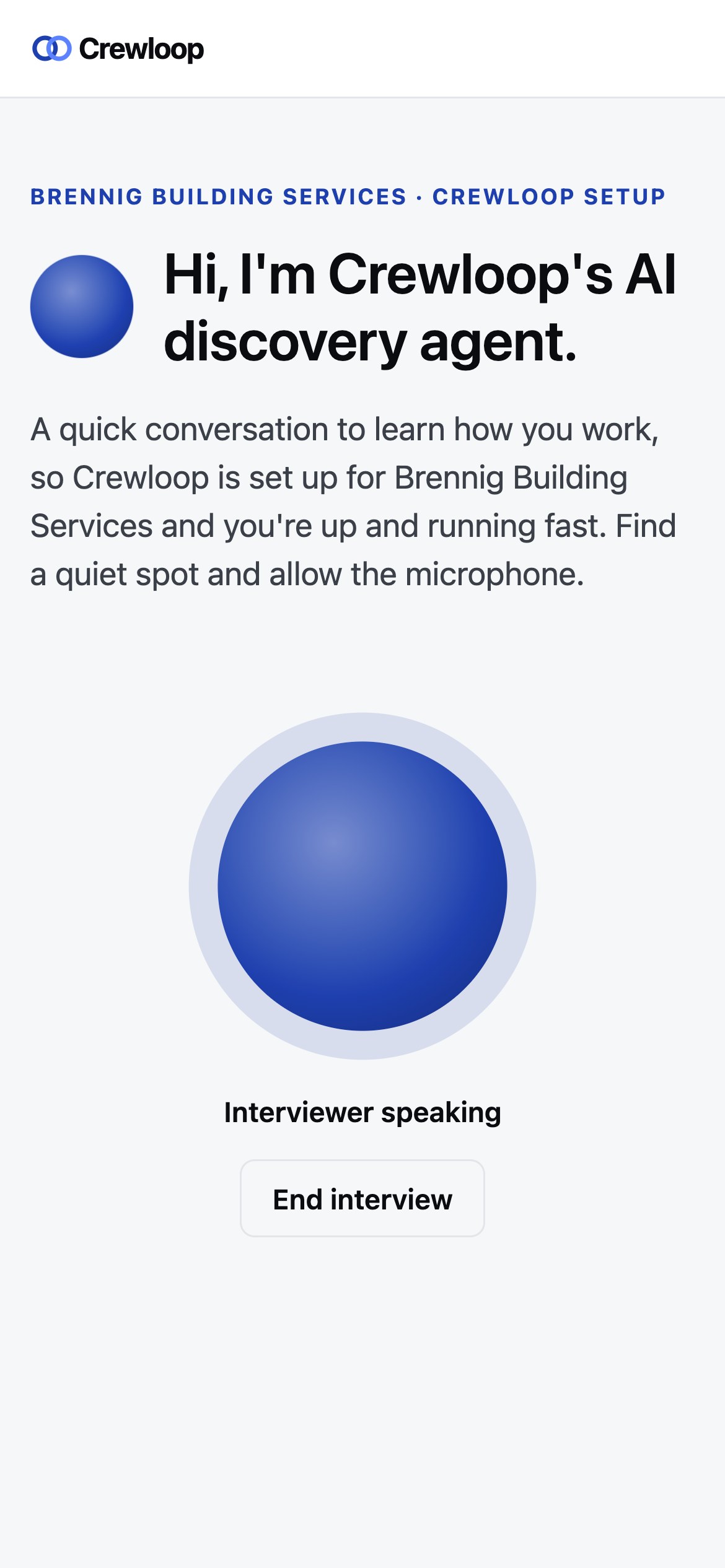
Crewloop is a made-up field service platform, and Brennig Building Services its made-up customer: a heating, air conditioning and facilities maintenance contractor. Answer as a scheduler, an engineer, a finance controller or an operations director there, or as yourself in your own job, and hear how it adapts to your role. Five to ten minutes in your browser, no sign-up.
Before you send the first link.
What does it ask people?
Their role, the work that lands on them, the last real example step by step, the systems and handoffs involved, volumes and exceptions, where your product could fit, and what must stay with a person.
Can we use it before the contract is signed?
Yes, and on large deals that is where it pays off first. Send the link during the evaluation: every stakeholder is heard, you see what each leader needs and where they disagree, and your engineers set up the sandbox around the customer's real workflows.
Does it configure our product?
No. It does the discovery and gives your team the context to plan and configure: workflows, use cases, requirements and open questions. Your engineers stay in charge of the build.
Does it replace our forward-deployed engineers?
No. It does the groundwork for every customer at once, so each engineer starts with far more of the customer's context, ramps up faster and spends their time configuring and building.
What do people at the customer see?
A page in your brand: "Hi, I'm [your product]'s AI discovery agent." It says it is working with your team, talks to them for about fifteen minutes, and never sells.
Who should we send it to?
Everyone whose work your product will touch: the executive sponsor and the heads of the teams involved, and above all the people who will use it every day. Discovery usually reaches the first two; the users are where the detail is, and here every one of them can take part.
How long does it take?
About 15 minutes, by voice, in the browser. People only need the link and a microphone.
Can people come back and add more?
Yes. The link stays theirs: when they reopen it, it remembers what they said and goes after what is still missing. If a call drops, they carry on where they left off.
Does it sell to people?
No. Where your product could help, it asks how that would sit with the team, which shows you where the value is. It is honest with people your product doesn't serve.
Does it know what colleagues said?
Yes. Every conversation adds to the same picture, so it confirms what is known and goes after the gaps and disagreements. It never says who said what. Names and transcripts stay in your console.
How do we set our product context?
Once: your product's building blocks, the kinds of role you meet and how you help each one, plus your branding.
Hit the ground running at your next customer.
- 01We set it up with your product and brand.
- 02You hear a simulated conversation.
- 03You send the link to your next customer.